
Eats365 runs the transaction. Eber keeps the customer after it. Together, they close the gap where loyalty usually breaks.
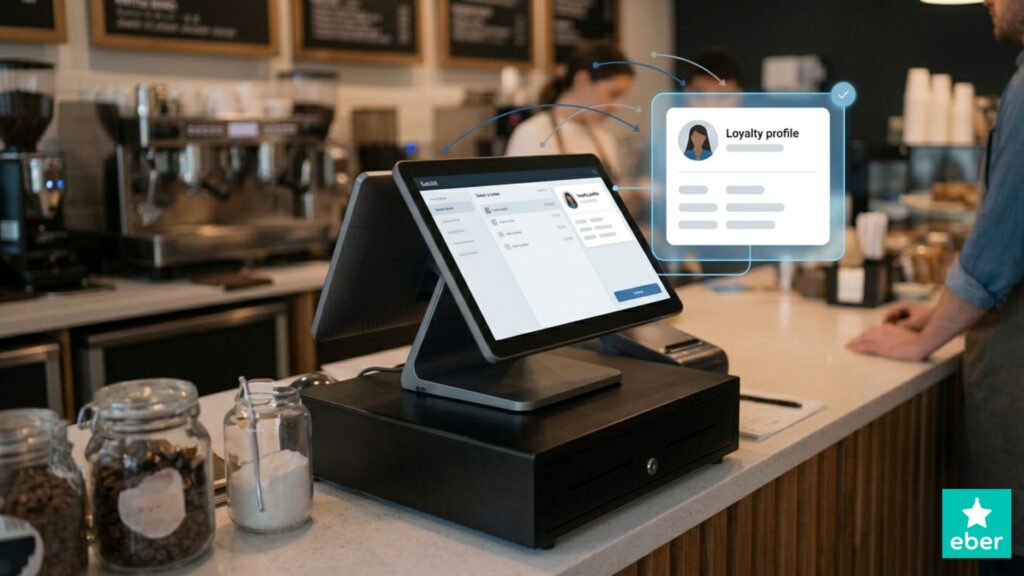
A regular customer walks into your second outlet. She’s visited your flagship 12 times, earned tier status, and knows your menu by heart. The staff have no idea. She gets treated like a walk-in, earns no recognition, and leaves without feeling seen.
This isn’t a staff problem. It’s a data problem, and one of the most common pain points for multi-outlet F&B brands operating loyalty today.
The reason it happens: loyalty still lives outside the moment that matters most. Checkout.
Staff switch screens. Points get missed. Rewards are hard to explain during a lunch rush. And when loyalty feels like extra work, it gets treated like a side task instead of a growth system.
The smarter move is to bring loyalty and CRM directly into the transaction flow so the recognition happens automatically, at the point of sale, every time.
POS-embedded loyalty means the loyalty experience happens inside the checkout flow, not alongside it or after it.
Instead of relying on a separate app, manual staff entry, or a post-sale sync, member lookup, point issuance, reward redemption, and tier recognition all happen at the POS in the same environment where the transaction closes.
For F&B operators, this changes three things at once:
The Eber × Eats365 integration is built on this model, with a direct API connection supporting real-time member lookup, automatic point issuance, reward redemption, tier recognition, and credit top-up at POS.

Here is what actually happens behind the scenes. The moment a transaction completes in Eats365, the purchase data is sent to Eber via a direct API connection. Eber processes it instantly, issues points to the customer’s account, checks for eligible rewards, and sends the updated loyalty status back to the POS. The whole exchange happens in the background while the staff member is still at the counter. No manual entry, no screen switching, no end-of-day reconciliation.
When a customer arrives, staff identify them by QR code, phone number, or member ID at the POS. When the sale closes, points are issued automatically. If the customer has an eligible reward, staff can redeem it within the same environment without leaving the checkout flow. For multi-outlet groups, tier benefits are recognized consistently at store level, not just at the location where the customer first enrolled.
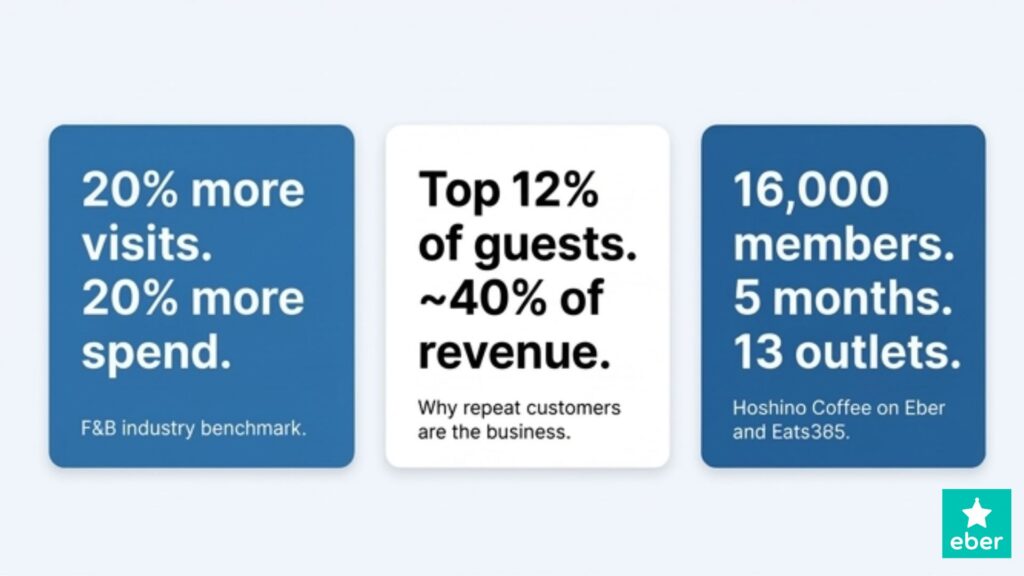
Hoshino Coffee runs this across 13 outlets. Using Eber and Eats365 together, they acquired 16,000 members in five months, achieved a 42% email open rate, and recorded a 12% increase in loyal customers.
Mr. TukTuk tells a similar story from the redemption side: 80%+ voucher redemption rate and a 5%+ re-visit rate. When rewards are easy to use at checkout, customers actually use them.
These outcomes aren’t exceptional marketing results. They’re what happens when loyalty is embedded into operations rather than bolted on top.
The business case for getting this right is significant.
Loyalty members in F&B visit 20% more often and spend 20% more than non-members. The top 12% of guests generate around 40% of revenue. Repeat customers aren’t a nice-to-have. They’re where a large share of outlet economics actually lives.
Automated retention programs can deliver 3–5× ROI, and win-back campaigns targeting guests inactive for 90 days can recover 12–15% of that segment. 81% of consumers say they would join a restaurant loyalty program if one were offered.
The gap between potential and reality is almost always operational. When loyalty is embedded at POS, the program captures data it otherwise misses, staff adoption stays consistent, and the repeat behavior that marketing needs to build on actually gets recorded.
Single-outlet brands feel loyalty friction at checkout. Multi-outlet brands feel it in the data.
Without a connected view, the same customer can look like three different people across three locations. One branch sees a VIP. Another sees a walk-in. Marketing sees partial behavior. Operations sees only local transactions. That weakens personalization and makes it nearly impossible to identify the customers who deserve more attention, or the ones who are quietly lapsing.
This is where the Eber × Eats365 integration earns its attention for growing F&B groups. Brands like The Coffee Academics and FRITES are running tiered loyalty architectures across locations on this stack, with centralized reporting, cross-location loyalty usage, and consistent member experience whether a customer walks into their first outlet or their fifth.
The customer data travels with the customer, not stays trapped at a single store.

Most brands don’t fail at loyalty because they lack the right rewards. They fail because the program adds work instead of removing it.
If you’re running F&B across multiple outlets and want to know whether this integration fits your current stack, and what a rollout would realistically look like, we can work through it in 15 minutes.
Stay close to what we’re learning from partners, or explore how we work together:
Get event recaps, product learnings, and partner insights from across the ecosystem.
Have a question or want to explore a potential collaboration?
Leave your details and we’ll reach out.