Why "Wait and See" Is a Loyalty Trap

The conventional wisdom: gather data first, build loyalty later. But this ignores a critical window.

In the first weeks, curiosity is high and habits are forming. A customer who visits three times in their first month is far more likely to become a regular. By the time most brands launch loyalty, that window has already closed.

“We were very nervous. We didn’t even know if people would be into it,” Catherine admitted. But building early meant learning faster — the loyalty program launched on the same day as the brand itself.

What Is a First-Experience Mechanic?

A first-experience mechanic makes the initial interaction so rewarding that the customer is immediately motivated to return.

This is not a discount. Discounts erode brand value. A first-experience mechanic is an invitation: “Try us. We know you’ll come back.”

The RM5.90 price removes perceived risk. The objective isn’t a profitable first bowl — it’s starting the habit formation cycle. Every subsequent visit is where value compounds.

The Pre-Launch Proof of Concept

Before TamJai Mixian officially opened, the team ran a three-day activation at Sunway Pyramid shopping mall.

The mechanic was simple: a mini-game with a lucky draw. No complex instructions, no heavy brand messaging — just a clear and immediate reason to participate.

The market responded immediately. Crowds gathered. Queues formed. Customers stayed even after the activation had officially closed for the day. By the end of three days, they had acquired around 800 signups — clear validation that the audience was ready and the appetite was real.

This early signal gave the team confidence to proceed with their simultaneous loyalty launch at opening. The data would come later. The commitment came first.

What the Numbers Show

The results of the first-experience approach were unambiguous.

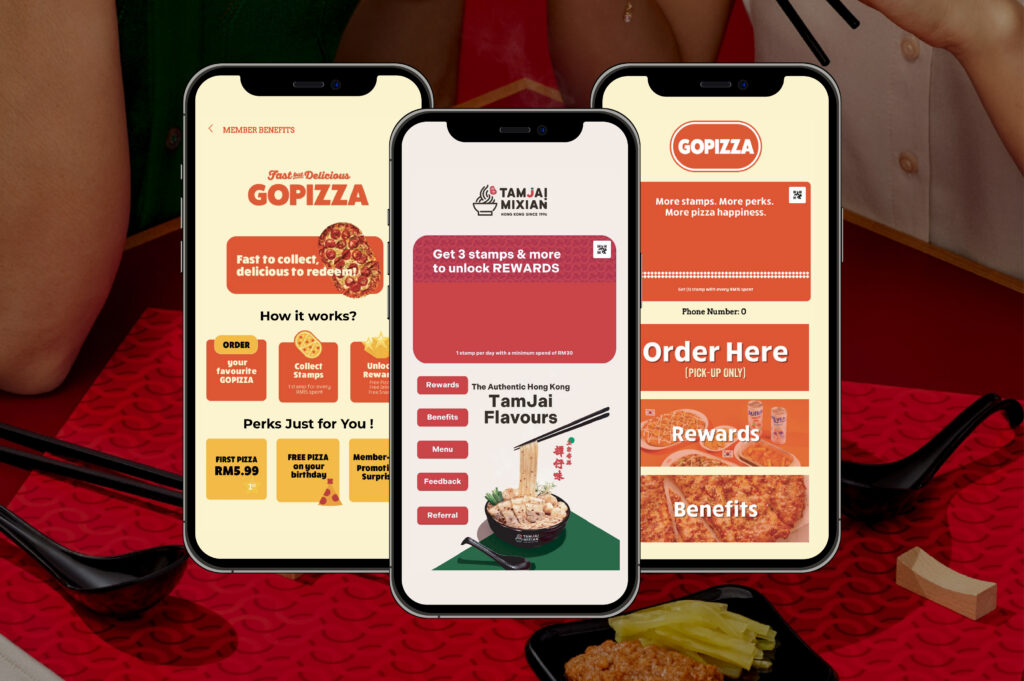
TamJai Mixian’s membership signups doubled within a short period, adding thousands of new members in just over a month. GoPizza scaled to nearly 10,000 members within three and a half months.

But raw numbers only tell part of the story. What sustained this growth was the automation layer built on top of the entry mechanic.

Once customers joined, they encountered spin-to-win wheels, instant rewards, and seamless redemption flows. Every interaction was frictionless and measurable. For the first time, Catherine’s team had real visibility into how customers behaved — how often they visited, what they ordered, what rewards they redeemed.

“We can see how much customers spend and what they win. It helps us understand them better,” she noted.

This visibility revealed a critical insight: not all customers behave the same way. Some visit once. Others come occasionally. A few become truly habitual — like a mother and son who ordered the same meal over 30 times.

That level of loyalty is not accidental. It is engineered — starting with a compelling first experience.


The Data Behind First-Experience Strategy

Eber’s APAC Consumer Loyalty Report 2026 confirms: a customer who visits 2x more often outperforms one who spends 20% more per visit. Frequency is the primary driver of long-term value.

If the goal is frequency, the first experience must motivate a return. A low-price entry mechanic creates a reason for the second visit before the customer has even left.

With Meta CPL up 21% YoY and Google Ads costs climbing, every brand needs to extract maximum lifetime value from each acquired customer. It starts with the first experience.

How to Apply First-Experience Thinking to Your Brand

The principles behind TamJai Mixian’s approach are not exclusive to restaurant chains. Any brand that relies on repeat customers can apply first-experience mechanics.

1. Define your “first bowl.” What is the single experience that most powerfully demonstrates your brand’s value? This is your entry mechanic candidate. Price it for trial, not for margin.

2. Launch loyalty simultaneously. Do not wait until you have data. Design your rewards structure, automation flows, and engagement mechanics before you open. The loyalty program should be ready the moment your first customer walks in.

3. Design for the second visit. The goal of the first visit is not revenue. It is the second visit. Design every aspect of the first experience — the welcome, the reward, the follow-up message — to make returning feel natural and expected.

4. Automate the follow-through. Once a customer joins your loyalty program, the system should do the work. Spin-to-win mechanics, birthday rewards, instant point notifications — these are not extras. They are the mechanics that convert a one-time visitor into a regular without requiring ongoing manual effort.

5. Measure frequency, not just spend. Track how many customers return within 30, 60, and 90 days. This is your true loyalty health metric. Spend per visit will follow naturally as habits solidify over time.

Loyalty as Infrastructure, Not Marketing

TamJai Mixian and GoPizza’s success is a case study in treating loyalty as infrastructure, not a campaign.

The most effective brands treat loyalty as a growth system designed into the customer experience from the very first interaction — not layered on top after the brand is established.

The RM5.90 bowl is a statement of intent: we are here to build a relationship, not just make a sale.

Start with the first experience. Build the habit. Let the system do the rest.


Eber is a loyalty marketing platform powering hundreds of brands across Malaysia, Singapore, Hong Kong, and Southeast Asia. Discover how Eber can help you engineer your first-experience mechanic at eber.co.

Related Posts

Why Eber’s ISO 27001 Certification Matters for Your Business Every time a customer scans a QR code at your counter, redeems a …

Why “Wait and See” Is a Loyalty Trap The conventional wisdom: gather data first, build loyalty later. But this ignores a critical …

How to Build a Magento Enterprise Loyalty Program That Drives Repeat Revenue A practical guide for Magento Enterprise (Adobe Commerce) retailers who …