
Why Your Loyalty Portal Pages Take So Long to Update (And How to Fix It) Product Update · Portal Pages Why Your …
Product Update · Portal Pages
Why Your Loyalty Portal
Pages Take So Long
to Update (And How to Fix It)
If you've ever waited on a developer to change a single line of copy on your loyalty program page, you already know the real problem with most retention platforms. It isn't the strategy. It's the execution gap between deciding something and shipping it.

From dev queue to live page: the gap between deciding a change and shipping it
If you've ever waited on a developer to change a single line of copy on your loyalty program page, you already know the real problem with most retention platforms.
It's not the strategy. It's the execution gap between deciding something and shipping it.
Marketers running loyalty programs across Malaysia, Singapore, Hong Kong, and Vietnam deal with this constantly. A new tier launches. A benefit changes. A market needs its own language strings. And every one of those updates queues up behind a dev ticket, because the platform was never built for marketers to touch directly.
The real problem
The Cost of a Slow Page Editor
Deloitte's APAC Digital Consumer research found 60% of marketers struggle to operationalise personalisation and loyalty journeys at scale. Strategy isn't usually the bottleneck. Shipping is.
That gap is easy to miss in a quarterly review, because the plan looks fine on paper. The tier restructure was approved. The benefit copy was signed off. The localised version was drafted. What doesn't show up on the slide is the three weeks those decisions spent sitting in a queue, waiting for someone else's sprint to have room.
And timing is most of the value. A tiering change that sits in a dev queue for two weeks is a tiering change your members never see in time.
"A tiering change that sits in a dev queue for two weeks is a tiering change your members never see in time."
The execution gapWhat's new
What Changed Inside Eber
We rebuilt how pages get built and edited inside the platform. Three things marketers can now do without a dev handoff.
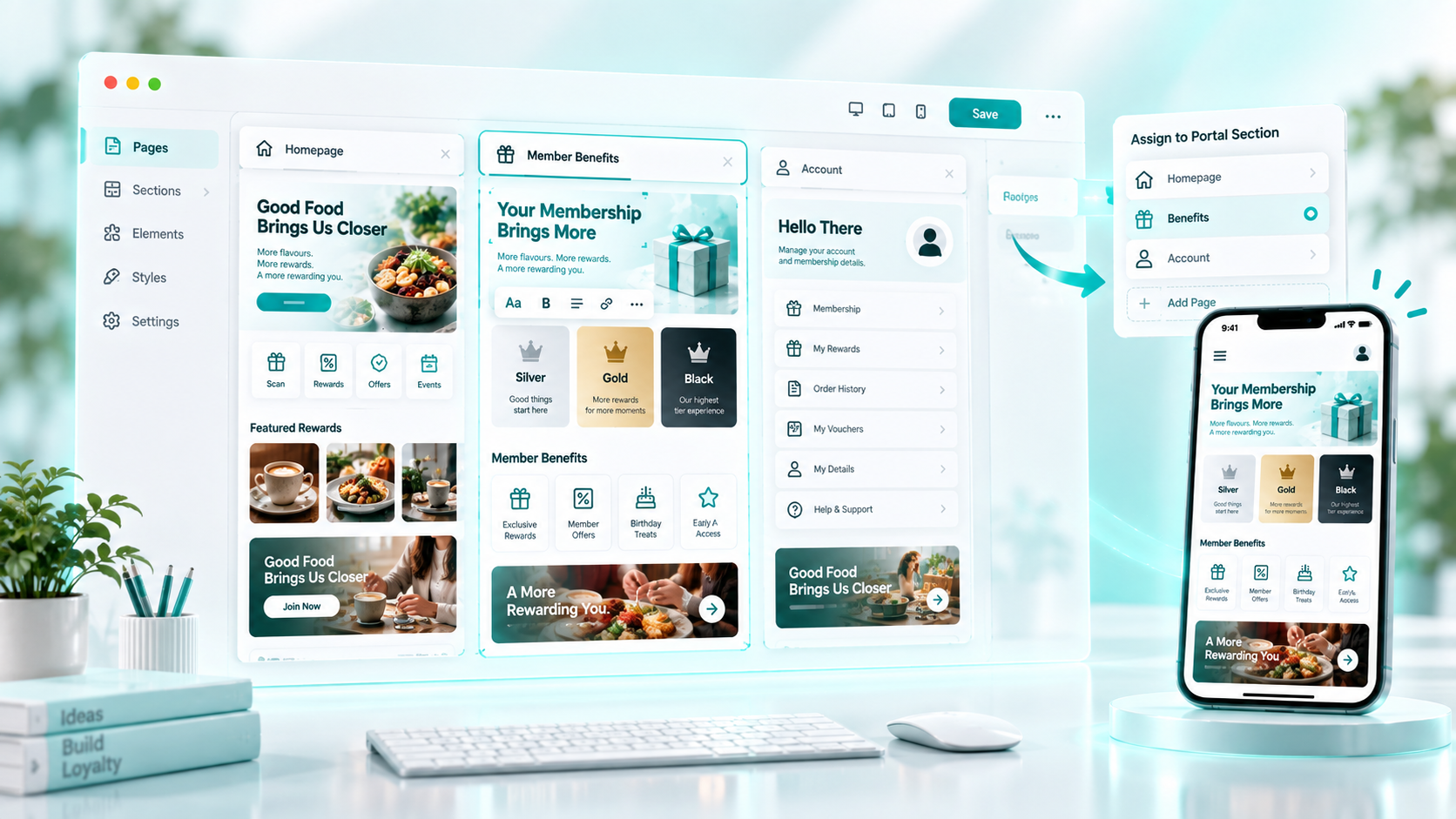
Building and editing portal pages directly in the platform
Update 01
Build and edit multiple pages in one session
If you're building a new member-benefit page, you can reference your homepage at the same time, so layout, theme, and tone stay consistent instead of drifting page by page.
That drift is the quiet cost of building pages one at a time, months apart. Nobody decides to let the benefits page look nothing like the homepage. It just happens, one small deviation at a time.
Update 02
Assign pages directly to portal sections
A page you build can be set as, say, the default Account section page for a specific consumer segment, without a separate deployment step.
The build and the placement happen in the same sitting. No handover, no ticket to point the portal at the thing you just made.
Update 03
Update your own language strings
If you're running the same program across four markets, portal language panels let you search and override webapp text directly, market by market.
So a wording fix in one market stops being a release-cycle problem. You find the string, you change it, and the other three markets stay exactly as they were.
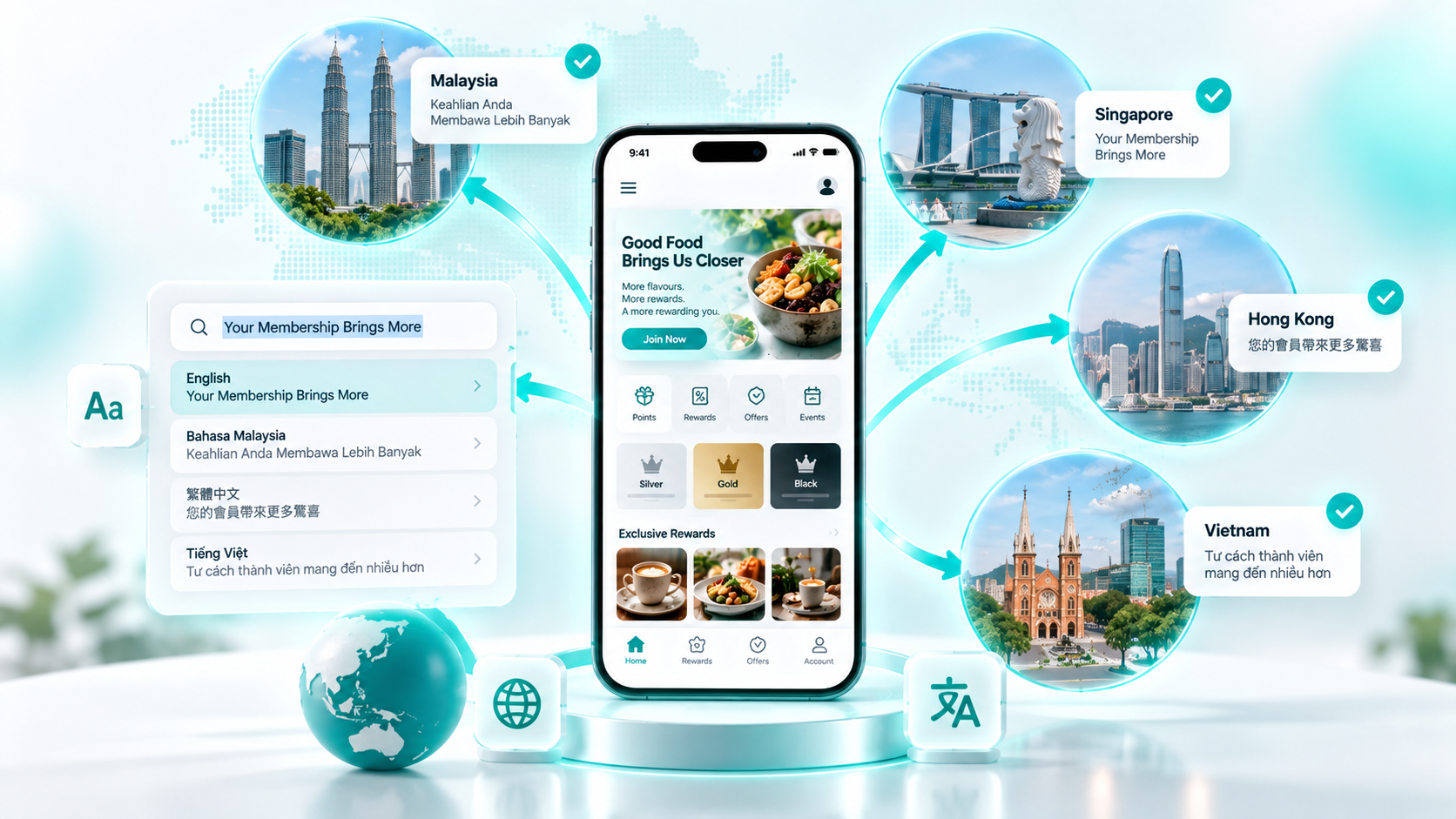
Portal language panels: overriding webapp text market by market
Notably, this runs on intelligence under the hood, but that's a detail, not the point. The point is that a page that used to take two weeks now takes one sitting.
Decide the
change
change
→
Build the
page
page
→
Assign to a
portal section
portal section
→
Live for
members
members
Same four steps as before. The difference is that one person can now walk the whole way across without stopping to ask anyone.
| The old loop | The new loop |
|---|---|
| Copy change raised as a dev ticket | Copy change edited and published in-platform |
| Each page built in isolation | Build one page while referencing another |
| New portal section needs a deployment | Assign a page to a portal section directly |
| Language strings changed by release | Search and override webapp text per market |
| Decided this quarter, live the next | Decided Monday, live the same week |
The bigger picture
What This Means for Your Loyalty Roadmap
The core principle behind comeback rate (frequency uplift) still holds: a customer who visits twice as often outperforms one who spends 20% more per visit. But you can't drive that frequency if the pages nudging your members toward that behaviour are stuck in a dev backlog.
Faster page execution means:
- Tier and benefit changes go live the same week they're decided, not the quarter after
- Portal pages stay visually consistent across your whole program, because whoever builds them can check the homepage while building
- Multi-market programs can localise language without waiting on a separate release
None of this replaces a good loyalty strategy. It just removes the reason good strategy keeps arriving late.
Research reference: Deloitte APAC Digital Consumer research on personalisation and loyalty journey execution. Book a demo →


Identity Retention: Why Your Best Customers Stop Comparing The Eber Show · Identity Retention Identity Retention: Why Your Best Customers Stop Comparing …

The Eber Show · Retention Playbook Three Categories, Three Conversations, One Retention Principle Between July and August we recorded three …