Digital Stamp Card for Malaysia and Singapore Businesses: Why Paper Punch Cards Are Costing You Customers

Every week, thousands of customers in Malaysia and Singapore walk out of a café, restaurant, or retail store with a paper punch card they will never use again.

Not because they don’t want the reward. Because the card is sitting in a drawer at home. Or at the bottom of their bag. Or it got wet. Or they simply forgot.

The paper punch card had a good run. But in 2026, it is quietly draining the loyalty budgets of businesses that still rely on it — and handing customers to competitors who make the experience easier.

This guide explains what a digital stamp card is, why businesses in Malaysia and Singapore are switching, and what to look for when choosing one.

What is a digital stamp card?

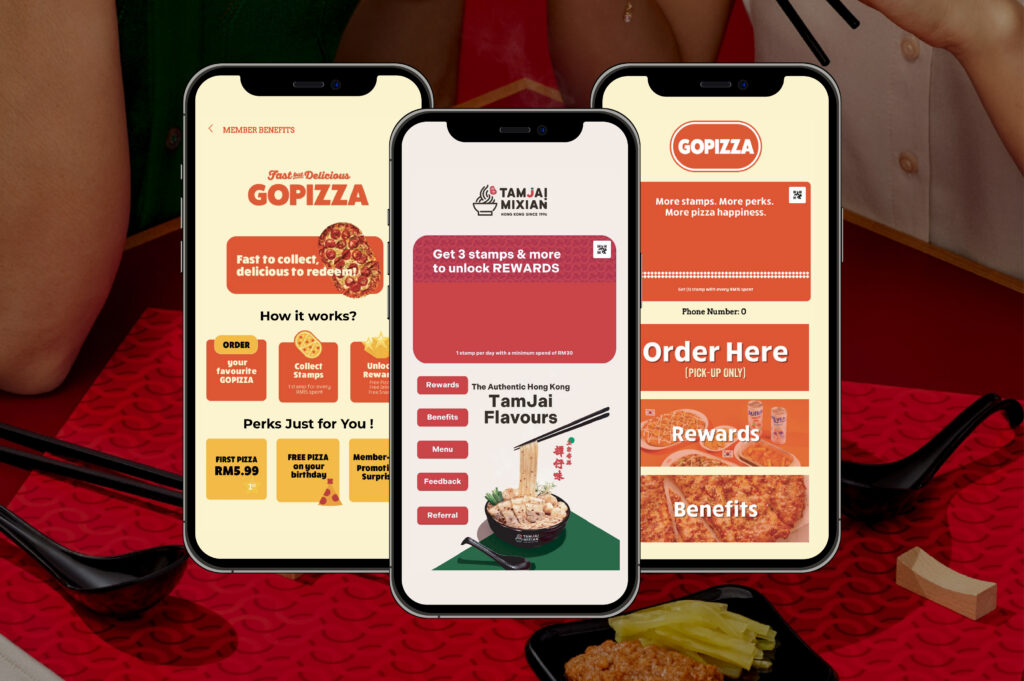
A digital stamp card works exactly like a paper punch card — customers collect stamps for every visit or purchase, and redeem them for a reward when they’re full. The difference is that it lives on the customer’s phone.

Instead of handing over a physical card, the customer scans a QR code at your counter. The stamp is recorded automatically. No paper. No printing. No lost cards. No fraud from customers who fill their own stamps.

When the card is full, the reward is triggered automatically — a free drink, a discount, a birthday treat, whatever you set.

Eber’s digital stamp card feature, for example, lets businesses set up a stamp program in minutes: choose how many stamps before a reward, set what the reward is, and go live. Customers can see their progress from any device without needing to download a separate app.

Why paper punch cards are failing your business

You have no data

When a customer fills a paper punch card, you learn one thing: they came back ten times. You don’t know their name, their contact, how often they visit, or whether they’ve been to your other outlet. The card tells you nothing useful.

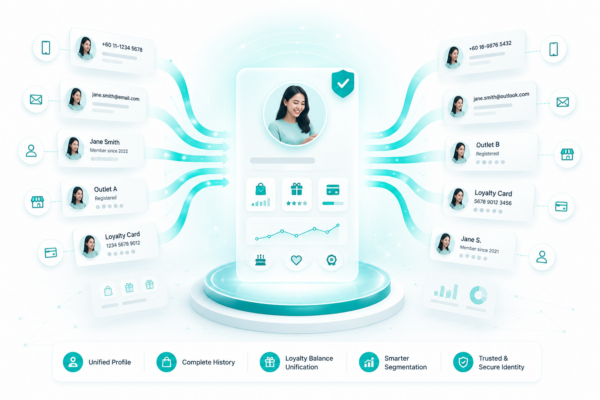
A digital stamp card captures every transaction against a customer profile. You can see who your most loyal customers are, when they last visited, and which ones are at risk of churning.

You can’t reach your customers

A paper card customer is anonymous. You have no way to send them a birthday offer, remind them they’re one stamp away from a reward, or let them know about a new menu item.

With a digital stamp card, every customer becomes a contactable member. You can send push notifications, WhatsApp messages, or emails directly from the platform.

Lost cards mean lost loyalty

Research from multiple loyalty platforms suggests the majority of paper punch cards are lost before they are redeemed. That means customers who were loyal enough to collect eight or nine stamps never got their reward — and some of them felt cheated enough to stop coming back.

A digital stamp card cannot be lost. The customer’s progress is saved automatically, even if they switch phones.

Fraud is impossible to prevent

Paper stamp fraud — customers filling in their own stamps, sharing cards, or photocopying them — is a real cost for F&B businesses. A digital system with QR validation eliminates this entirely.

How businesses in Malaysia and Singapore are using digital stamp cards

Across Malaysia and Singapore, the brands seeing the best results from digital stamp programs share a few things in common.

They keep the earn mechanic simple. One stamp per visit, or one stamp per RM10 or SGD5 spent. Complexity kills participation. The best programs are ones a customer can explain to a friend in one sentence.

They make the reward worth collecting. A free drink, a 20% discount, or a birthday treat are consistently the highest-redemption rewards in F&B. The reward needs to feel genuinely valuable — not like an afterthought.

They combine the stamp card with a membership tier. The stamp card drives repeat visits. The membership tier drives higher spend. Businesses running both together see significantly higher average basket sizes than those running either alone.

They use the data. The stamp card is not just a retention tool — it is a data collection tool. Every stamp is a signal. Businesses that look at this data weekly — who is collecting, who is redeeming, who hasn’t visited in 30 days — can act on it in time to win customers back.

What to look for in a digital stamp card platform

If you’re evaluating digital stamp card options for your business in Malaysia or Singapore, these are the features that matter most.

No app download required for customers : Any friction at the point of sign-up kills participation. The best stamp card platforms work via QR code and a browser — no app needed.

Works with your existing POS or counter setup : You shouldn’t need to replace your POS to run a digital stamp card. Look for platforms that work alongside your existing setup.

Customer data ownership : Some platforms own your customer data; you just get access to it. Make sure the platform you choose gives you full access to your own customer list.

Built-in communication tools : The stamp card is the entry point. The ability to message your members — via push notification, SMS, or email — is what turns a stamp card into a retention engine.

Multi-outlet support : If you have more than one location, your customers should be able to collect stamps across all of them, and you should be able to see performance per outlet.

Analytics : Redemption rate, active vs. lapsed members, top customers by visit frequency — these are the numbers that tell you if your program is working.

Digital stamp card vs. full loyalty program: which do you need?

A digital stamp card is the right starting point for most businesses. It’s simple, low-cost to set up, and immediately familiar to customers.

A full loyalty program — with membership tiers, points, CRM, and marketing automation — makes sense when you have more than one outlet, when you want to personalise offers by customer segment, or when you’re ready to use customer data strategically to drive revenue.

Eber offers both. You can start with a stamp card and grow into a full loyalty and membership platform without switching systems. That means your customer data, your member list, and your brand stay in one place as your program evolves.

Getting started

If you’re running a café, restaurant, retail store, or any business with repeat customers in Malaysia or Singapore, a digital stamp card is one of the highest-ROI tools you can add in the next 30 days.

You don’t need a large budget. You don’t need a developer. You need a clear reward, a QR code on your counter, and a platform that handles the rest.

Ready to replace your paper punch cards? Book a free demo with Eber and we’ll show you how to set up your first digital stamp card program in under an hour.

Book a free demo →

This article is part of Eber’s series on loyalty and retention for brands in Malaysia and Singapore. See also: Loyalty and Membership System for Singapore F&B Brands | Best Loyalty Program Structures for Singapore Businesses

Related Posts

Role-Based Permissions: How to Scale Your Loyalty Program Team Without Losing Control Security & Operations Role-Based Permissions: How to Scale Your Loyalty …

GoPizza’s 10,000-Member Sprint: Engineering Rapid Loyalty Growth in Malaysia GoPizza × Eber  ·  Loyalty Growth GoPizza’s 10,000-Member Sprint: Engineering Rapid Loyalty Growth …

Outback x Eber:Outback 香港如何用會員體驗提升顧客回訪 The Eber Show  ·  顧客回訪 Outback x Eber:Outback 香港如何用會員體驗提升顧客回訪 對很多香港顧客來說,Outback 不只是一間吃牛扒的餐廳,而是家庭聚餐、朋友聚會,甚至是平日想犒賞自己時會自然想起的 casual dining 品牌。Outback 香港 Marketing Lead Patrick …