Enterprise Sales · Vendor Security What Enterprise Buyers Now Evaluate in SaaS Vendors Security used to be question ten in …

With hawker favourites, café chains, and global brands all competing for the same customer spend, Singapore F&B operators face one core challenge: bringing customers back. A well-built restaurant loyalty system turns that challenge into steady, predictable revenue.
Singapore's F&B industry moves fast, and a restaurant loyalty system is quickly becoming the difference between brands that grow and brands that stall.
A restaurant loyalty system is more than a digital punch card. It's the infrastructure that lets an F&B brand track who its customers are, reward them for coming back, and turn that data into smarter marketing decisions. For Singapore restaurants, cafés, bakeries, and quick service brands, it has become an essential driver of long-term growth rather than a nice-to-have add-on.
A strong loyalty strategy does more than offer perks. It builds habits, increases average spend, and creates steady, predictable revenue.
Repeat customers are the backbone of any F&B business. While first-time customers often arrive through ads, foot traffic, or social media hype, repeat customers return because they have a relationship with your brand. A loyalty program strengthens that relationship.
In Singapore, diners are familiar with point-earning systems, stamp cards, and digital rewards. When customers know that every meal or drink earns them points toward a future reward, they begin to choose your brand more frequently, creating a positive cycle.
This cycle significantly increases visit frequency. A customer who dines once a month may now visit two to three times because of reward incentives. Over time, the combined increase in visits leads to higher revenue without relying solely on promotions or ads.
F&B brands in Singapore often deal with unpredictable customer flow. Weekdays may be quiet, certain locations have seasonal dips, and weather conditions can affect foot traffic. A loyalty program acts as an anchor for revenue stability.
When customers know they can earn double points during off-peak hours or receive birthday perks in their birthday month, they are more likely to choose your outlet even when they have other options.
These campaigns encourage customers to distribute their visits more evenly and create predictable revenue patterns that F&B operators can depend on.
One of the most direct ways loyalty programs increase revenue is by increasing the average amount spent per visit. When customers are working toward rewards or trying to reach the next membership tier, they naturally spend more.
In Singapore, where dining options are abundant, customers appreciate the sense of value that loyalty rewards provide, and often justify spending slightly more because they see immediate or future benefits. Research globally has shown that loyalty members spend more per transaction compared with non-members, and Singapore consumers follow the same pattern, especially in F&B where rewards are easy to understand and redeem.

Upselling is easier and more effective when tied to a loyalty structure. Prompts like "add a side for extra points" or "try our seasonal item to unlock a bonus reward" turn a simple menu suggestion into a micro-incentive that influences buying decisions.
Singaporeans are comfortable with digital rewards and appreciate transparency in benefits. If customers see that they earn 20 extra points by adding a drink or dessert, they often agree because the reward feels immediate and meaningful.
Retention is the most profitable part of F&B operations. It costs significantly less to retain an existing customer than to attract a new one. A loyalty program creates strong reasons for customers to return.
Without a loyalty program, many customers may forget about your brand, especially in a city filled with new cafés and restaurants opening every month. Retention tools ensure that your brand stays top of mind.

Unlike traditional punch cards, modern loyalty programs give F&B brands powerful data about customer behaviour. Restaurants can segment customers by frequency, spend level, favourite items, last visit date, location preferences, and order channel (dine-in, pickup, delivery).
This allows brands to create personalised offers that resonate with specific groups.
Personalised rewards increase customer lifetime value because they speak to individual habits rather than generic promotions.
Singapore consumers expect a seamless digital experience. QR ordering, cashless payments, and mobile apps have become standard. A digital loyalty program enhances this experience by allowing customers to sign up instantly using QR codes, earn points automatically, redeem rewards without asking staff, track rewards on their phone, receive SMS or WhatsApp updates, and join membership tiers without paperwork.
This reduces friction for customers and reduces manual work for staff. Faster, smoother processes create a positive dining experience that encourages customers to return.
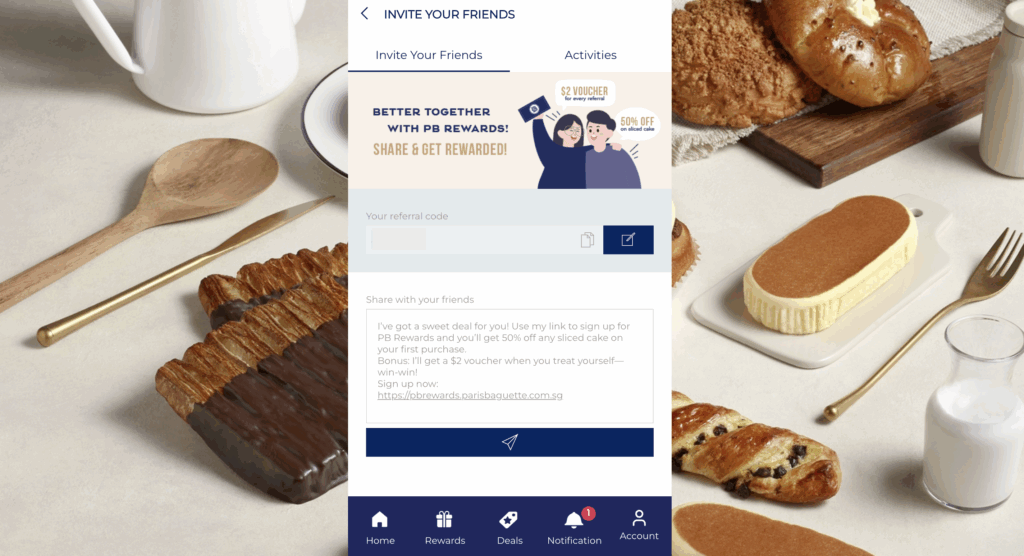
When customers enjoy benefits from a loyalty program, they naturally tell others. This is especially common among value-driven diners, families, students and young adults, and café lovers who frequent the same spots.
Word of mouth remains one of the strongest marketing channels in Singapore. Referral rewards can amplify this effect and bring in new customers at a lower cost.
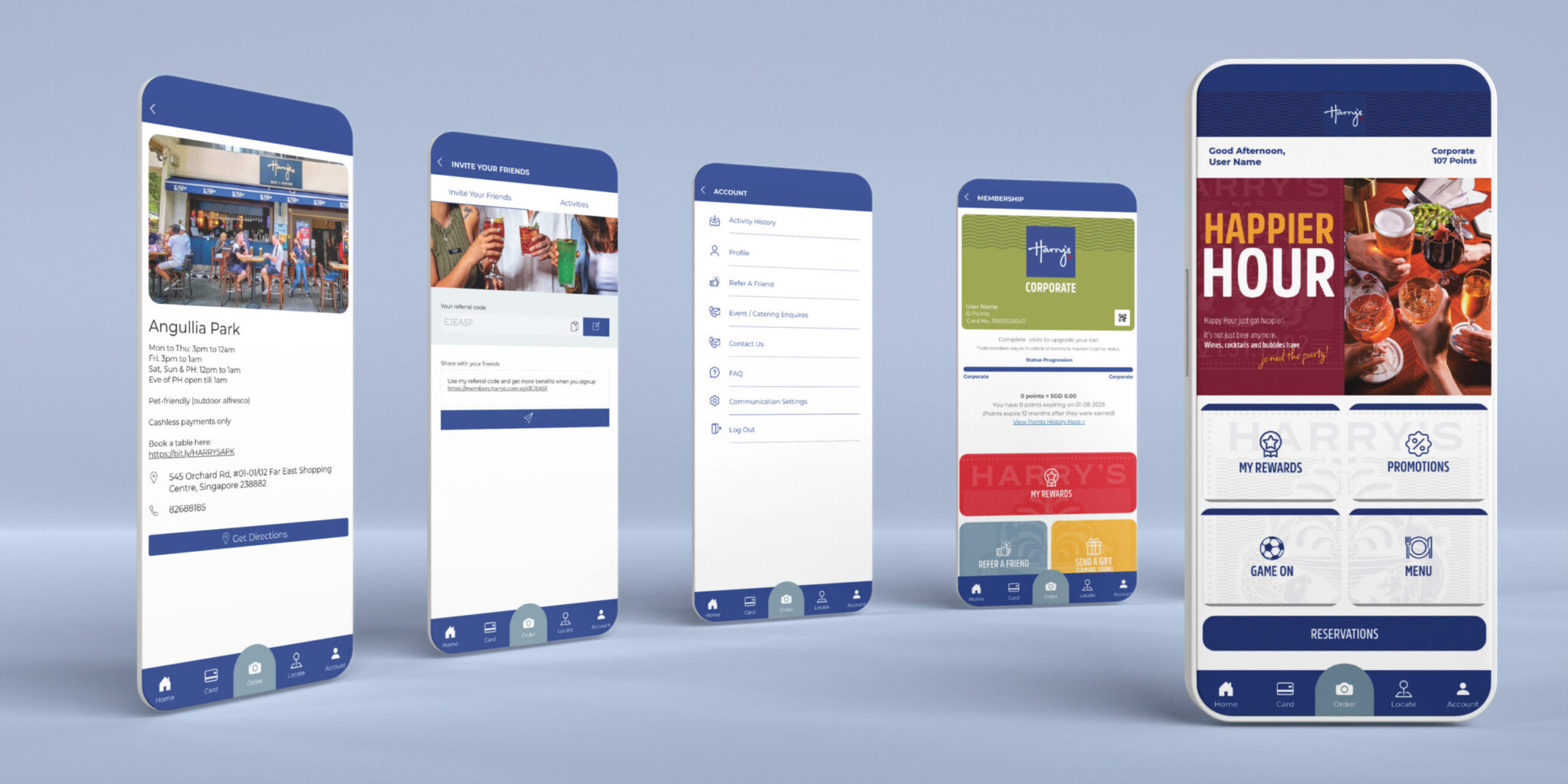
Harry's is one of the clearest examples of a restaurant loyalty system done right in the Singapore market. Rather than making customers wait months to accumulate points before seeing any benefit, Harry's takes an app-first approach centred on instant value.
Instant welcome benefit. New members receive a $10 voucher immediately on sign-up, giving them a reason to use the app on their very first visit instead of "eventually."
Mobile-first design. Table booking is built directly into the loyalty app, so the app solves a real everyday problem rather than just tracking points in the background.
Real-time benefits. Vouchers and tier recognition are delivered instantly, removing the friction that causes many loyalty programs to be abandoned after the first sign-up.
Sourced from Eber's analysis in Best Loyalty Program Structures in Singapore.
The takeaway for other Singapore F&B brands is simple: front-loading value sparks early engagement and increases visit frequency, because Singapore customers respond strongly to immediate, tangible rewards rather than long-term point accumulation.
See how Eber can bring instant rewards, table booking, tiers, and marketing automation into one app for your Singapore F&B business.
Book a Free DemoFor F&B brands in Singapore, a loyalty program is no longer optional. It is a powerful revenue engine that increases visit frequency, average spend, customer retention, and long-term customer value. With the right digital tools, restaurants and cafés can understand customer behaviour, personalise rewards, and create a customer experience that keeps diners coming back again and again.
Eber is trusted by F&B brands to grow retention, increase revenue, and build long-term customer relationships. If you're ready to build a loyalty program that works for your business, explore how Eber can help you launch, automate, and grow your customer base.
Our team will walk you through points, tiers, rewards, and automation, mapped to how your Singapore F&B business actually runs.
Talk to Us Today
Enterprise Sales · Vendor Security What Enterprise Buyers Now Evaluate in SaaS Vendors Security used to be question ten in …
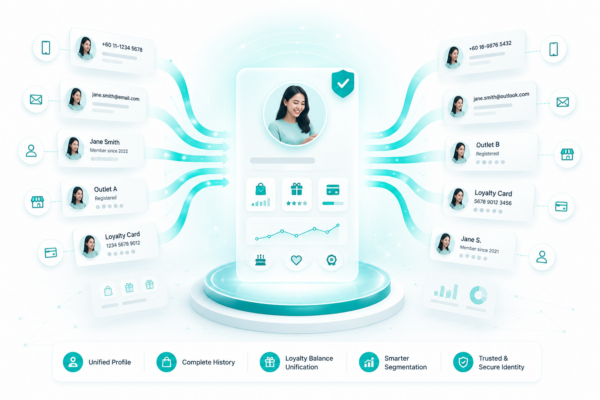
Eber Platform · Data & Identity PII Mastering: The Unsexy Feature That Makes Personalisation Actually Work Everyone wants personalisation. Fewer …
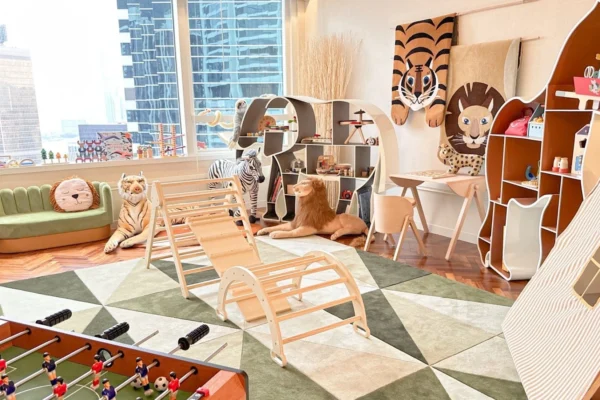
2020年由零開始打造家庭品牌:Bimbo Concept 創辦人 Elaine So 談「有家感覺」的零售 創辦人專訪 · Bimbo Concept 2020年由零開始打造家庭品牌:做一間有家感覺嘅店 Elaine So 喺全球疫情最嚴峻嘅時候創立兒童生活品牌。佢建立嘅唔單止係一間店,而係一個令家長同小朋友都想一再回來嘅地方。呢個係實體零售最強留客工具背後嘅故事。 Peggy Hong· 2026年6月· 閱讀約8分鐘 睇全文 ↓ 2020年,大部分有理性嘅創業計劃都唔會揀喺呢一年開實體零售品牌。 全球供應鏈嚴重受阻,消費者開支急劇收縮,香港本身亦面對特殊嘅不確定性。等等、等個市場清晰啲、等個環境穩定啲、等個時機唔咁嚇人,呢啲理由係完全成立嘅。 …