From Receipts to Revenue: What Sycarda’s Justin Taught Us About Data A recap of our latest podcast episode with Justin, Co-founder of …
A customer walks into your restaurant, loves the experience, and wants to bring their family next week. Before they leave, they buy a gift card to make sure it happens.
That single transaction just did three things for your business: it locked in future revenue, it introduced a new customer who has never visited before, and it gave you a physical brand touchpoint that travels to someone who didn’t know you existed.
This is why gift card programs are one of the fastest-growing tools in loyalty marketing across Malaysia and Singapore — and why businesses that treat gift cards as an afterthought are leaving significant revenue on the table.
A business gift card program lets your customers purchase a stored-value card — physical or digital — that can be used to pay for your products or services. The purchaser gives it to someone else as a gift, or keeps it for their own future use.
For businesses, this is not just a convenience feature. It is a cash flow tool (you receive the money before the service is delivered), a customer acquisition channel (gift recipients are often new customers), and a retention driver (customers who have a balance on a gift card return more frequently to use it).
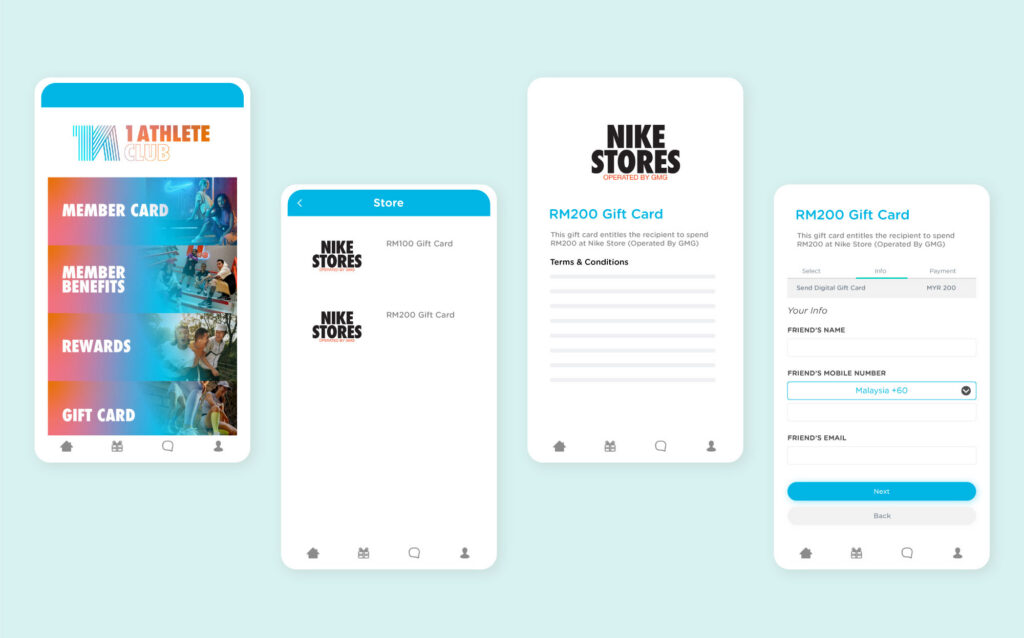
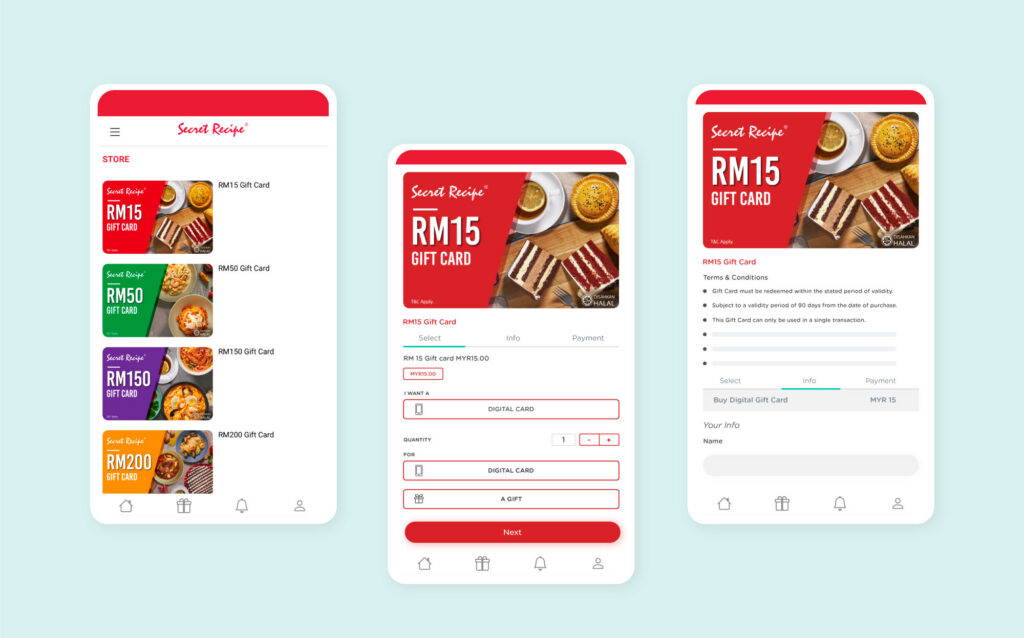
Modern gift card programs, like the one available through Eber, are fully digital. Customers can purchase them online or in-store, receive them via email or WhatsApp, and redeem them at any outlet. The entire flow is trackable — you can see how many gift cards were issued, how many have been redeemed, and how much unspent balance exists.
Malaysia’s gift card and incentive market is expanding rapidly, driven by rising digital payment adoption, a growing corporate gifting culture, and consumer preference for flexible rewards. Singapore has seen similar growth, with QR-based gifting behaviour accelerating significantly after government digital voucher programs normalised the format across thousands of merchants.
For businesses, three specific trends make now a particularly strong time to launch a gift card program.
Corporate gifting demand is rising. Across Malaysia and Singapore, companies are shifting away from physical hampers toward digital gift cards for employee rewards and client appreciation. A business with a digital gift card program can tap into this B2B channel with almost no additional effort.
The F&B sector is leading adoption. Restaurants, cafés, and quick-serve brands across KL, Johor Bahru, Singapore, and Penang are seeing strong gift card uptake during festive periods (Raya, Chinese New Year, Deepavali, Christmas) and for birthday gifting. Customers actively look for gift cards from their favourite F&B brands.
Digital delivery removes the friction. A physical gift card requires printing, inventory management, and in-store distribution. A digital gift card can be set up in a day, sent instantly via email or messaging apps, and tracked in real time. For multi-outlet brands and eCommerce businesses, this is transformative.
The revenue impact of a gift card program extends well beyond the face value of each card sold. Here is how it compounds.
Not all gift cards are fully redeemed. The unredeemed balance — called breakage — represents pure revenue for your business. Industry estimates across the retail and F&B sectors suggest breakage rates of 10–20%. For a business selling RM50,000 per year in gift cards, this is RM5,000–10,000 in additional revenue from cards that were purchased but never fully spent.
Gift card recipients are often people who have never visited your business before. When they come in to redeem, they are arriving with a positive predisposition (someone they trust gave them this) and a specific reason to engage. These first-time visitors convert to repeat customers at significantly higher rates than cold walk-ins.
Customers redeeming a gift card consistently spend more than the card’s face value. They treat the gift card as “free money” and are more likely to add items, upgrade, or order more than they would if paying from their own wallet. This over-redemption effect is well-documented across retail and F&B sectors.
The most effective gift card programs are integrated with a loyalty programme. When a customer redeems a gift card and earns loyalty points in the same transaction, you create a double incentive to return: they have enjoyed the experience (gift card), and they have started accumulating value (points). This combination is what turns a one-time gift card recipient into a long-term loyal customer.
Eber’s gift card feature is designed to work alongside the loyalty and membership system — so a customer can buy a gift card, the recipient can use it, earn points, and join the membership programme, all within the same platform.
A mid-size F&B chain in KL might run the following program: digital gift cards in denominations of RM30, RM50, and RM100, purchasable on their website and redeemable at all outlets. During Raya and Chinese New Year, they promote the gift cards via WhatsApp broadcast to existing members, using Eber’s messaging feature. Corporate clients can purchase in bulk via a simple order form. Gift card recipients who have never visited the brand receive a first-time visit voucher alongside their gift card, integrated with the Eber onboarding flow.
A Singapore retail brand running gift cards via Eber would integrate them with their existing membership programme. Customers who spend above a threshold are prompted to purchase a gift card for a friend (with a small bonus value as incentive). The gift card recipient is invited to join the membership programme at first redemption, at which point they receive a welcome offer. The brand tracks all of this in Eber’s dashboard: cards issued, redeemed, outstanding balance, and new member acquisitions from gift card gifting.
If you are evaluating gift card platforms for your business in Malaysia or Singapore, prioritise these capabilities.
Digital-first delivery. The card should be deliverable via email, WhatsApp, or a link — not just as a physical card. Malaysian and Singaporean consumers expect digital delivery.
Custom branding. Your gift card should look like your brand, not a generic template. Logo, brand colours, and a custom message field are the minimum.
Multi-outlet redemption. If you have more than one location, the gift card must work across all of them from day one.
Real-time tracking. You need to see issued cards, redemption status, outstanding balances, and expiry in one dashboard.
Integration with loyalty programme. As above — the biggest mistake businesses make is running gift cards as a separate system from their loyalty programme. Integration turns gift cards from a one-time transaction into a relationship starter.
Bulk purchase for corporate gifting. If you want to tap the B2B market, your platform needs to support bulk orders, custom denominations, and invoice-based payment.
The barrier to launching a gift card program in 2026 is low. You do not need a custom app, a developer, or a large upfront investment. You need a platform that handles the infrastructure, a clear denomination strategy, and a launch plan that gets the first cards in front of customers.
Eber’s gift card feature is built for exactly this. Set up your gift card program, connect it to your loyalty and membership platform, and start selling within days — online, in-store, or both.
Ready to launch your gift card program? Book a free demo and see how Eber’s gift card and loyalty platform works together for F&B and retail brands in Malaysia and Singapore.
This article is part of Eber’s series on loyalty and retention for brands in Malaysia and Singapore. See also: Best Loyalty Program Examples in Malaysia | Gift Cards
From Receipts to Revenue: What Sycarda’s Justin Taught Us About Data A recap of our latest podcast episode with Justin, Co-founder of …
Gift Card Programs for Business in Malaysia and Singapore: How to Turn Gifting Into a Growth Engine A customer walks into your …
Digital Stamp Card for Malaysia and Singapore Businesses: Why Paper Punch Cards Are Costing You Customers Every week, thousands of customers in …
See how Eber helps your business build loyalty, reduce churn, and grow repeat revenue. Get in touch and our team will reach out to you.