

Your POS Knows What Sold. It Doesn't Know Who Bought It.
The first-party data gap that’s quietly costing F&B brands their most loyal customers.

Running a loyalty program for F&B brands in Southeast Asia comes with a quiet problem most operators don’t notice until it’s too late.
The business is doing well. Tables are turning. The POS is humming. End-of-day reports show which dishes moved, which time slots were busy, and which outlet had the strongest week. The numbers look clean.
But ask a different question — who are your top 20% of customers, when did they last visit, and what would bring them back this week — and the system goes quiet.
That’s the gap. And it’s bigger than most F&B operators realise.
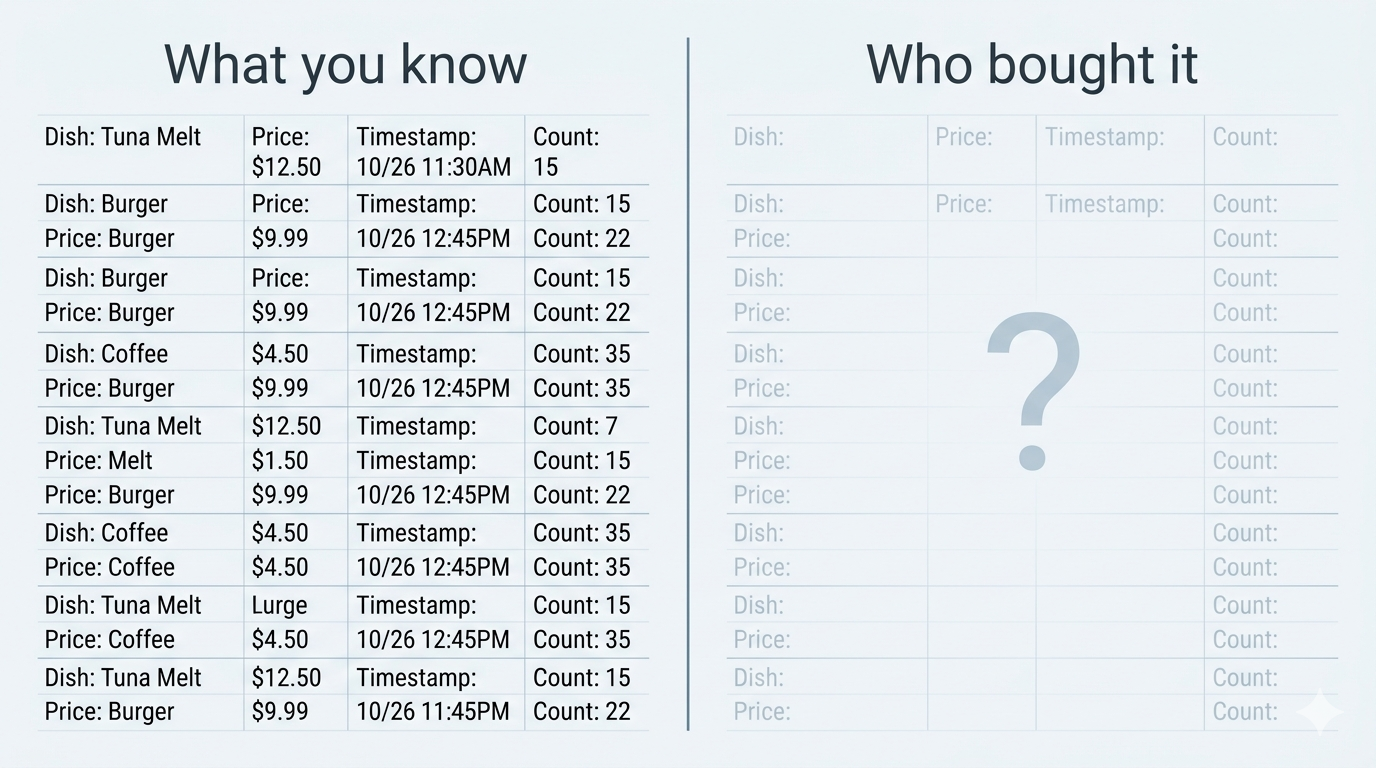
The data you have vs. the data you need
Every F&B business generates two kinds of data.
The first is transactional: what was ordered, at what price, at what time, through which channel. POS systems are very good at this. Most operators have years of it.
The second is relational: who the customer is, how often they come, what they typically order, when they went quiet. This is the data that drives retention. And most operators have almost none of it.
The gap exists because POS systems were built to process orders, not identify customers. A transaction completes, the receipt prints, and the customer walks out. The fact that the same person has come in every Tuesday for two years — and hasn’t shown up in three weeks — is invisible.
This isn’t a technology failure. It’s a data architecture problem. And it tends to go unnoticed until a business tries to run a win-back campaign and realises it has no idea who to reach.

What anonymous data actually costs you
Consider a mid-sized café group with three outlets. On paper, the business looks fine. But underneath, they have no idea that roughly a third of their revenue comes from a small pool of regulars — customers who visit frequently, spend above average, and refer friends. They’re the backbone of the business, but they’re invisible in the data. Indistinguishable from anyone who walked in once and never came back.
When one of those regulars stops coming, there’s no signal. No alert. No automated message. The business loses a high-value customer with no mechanism to notice, let alone respond.
And it compounds. Without knowing who your customers are, you can’t personalise. Every promotion goes to the same generic audience. The lapsed regular gets the same new customer offer that’s been running for months. The coffee-only customer gets a dinner promotion. Generic marketing to an anonymous audience is expensive and largely ineffective — but it’s often the only option when the data doesn’t distinguish one customer from another.
The loyalty program that doesn’t fix the problem
Here’s where a lot of F&B brands make a mistake.
They recognise the retention problem, launch a loyalty program, and expect the data gap to close automatically. More often, it doesn’t — because the program was designed around redemption, not identification.
A stamp card gives customers a reason to come back. It doesn’t tell you who they are unless they register. A points program can run for years with a large chunk of transactions attributed to anonymous walk-ins who never signed up. You know a lot of points were earned. You don’t know by whom.
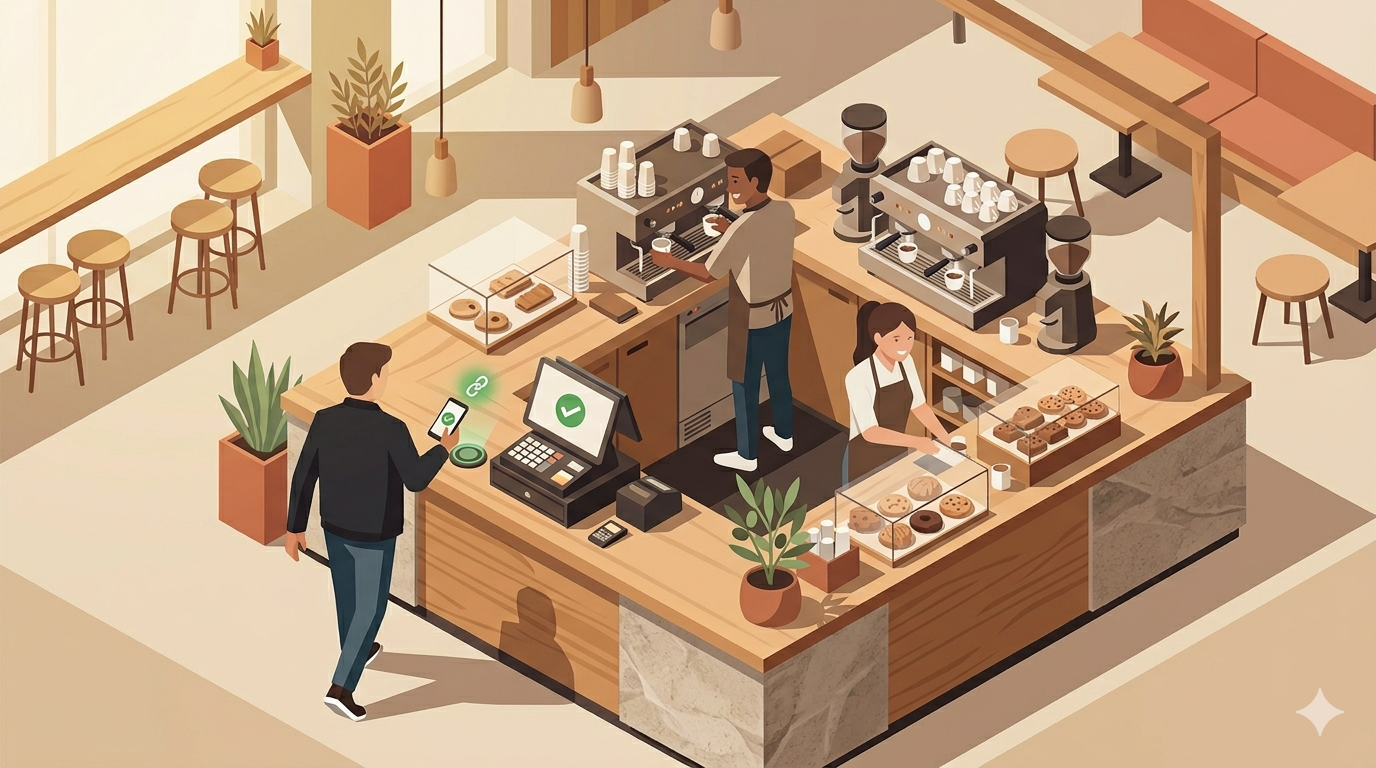
The programs that actually close the gap are built around capturing identity at the point of transaction — not as a separate step the customer has to remember, but as a natural part of how the experience works. Scan, earn, identify. No friction, no extra step.
When that’s in place, every transaction builds a profile. Frequency, spend, preferences, last visit date — all of it accumulates into something you can actually use.

What becomes possible when the gap is closed
The most immediate win is win-back. When you can see which customers have gone quiet and reach them directly, a simple “we miss you” message with a relevant offer converts at a meaningfully higher rate than a broadcast promotion. It’s targeted, timely, and the customer feels seen rather than spammed.
The second is real segmentation. The regular who comes in three times a week doesn’t need an acquisition offer — they need to feel appreciated. The occasional high spender might respond to a reason to return. The coffee-only customer probably doesn’t need a dinner voucher. None of this is possible without identity data.
The third is understanding what actually drives retention. With anonymous transaction data, you can see revenue dropped last month. With customer-level data, you can see that a specific cohort has an unusually high churn rate at the 90-day mark. That’s a solvable problem. The anonymous version is just a chart that looks bad.
A different question to ask
Most F&B operators are good at asking how the business is doing. Revenue, covers, average spend per table.
The question worth adding is: how are our customers doing?
Are the regulars still regular? Are high-value customers still spending? Are there groups that used to come frequently and have quietly trailed off?
You can’t answer those questions with transactional data alone. You need to know who the transactions belong to.
That’s the gap. And it’s one worth closing.
Stay close to what we’re learning from partners, or explore how we work together:
Get event recaps, product learnings, and partner insights from across the ecosystem.
Have a question or want to explore a potential collaboration?
Leave your details and we’ll reach out.