

Retail Loyalty Program Malaysia: A Structure You Can Launch This Quarter
Malaysian shoppers already carry more memberships than they use. Here's how to structure a retail loyalty program they actually come back to, with a 90-day launch plan and real results from ALL IT, Kinokuniya and SHOPLOOOH.
Most retail loyalty programs in Malaysia don't fail at launch. They fail quietly, somewhere between the store and the website.
Picture a regular. She buys a laptop at one of your outlets, then orders the accessories from your webstore a week later. To your system, that's two strangers. Neither purchase tells you she's one of your best customers, so she gets the same promo blast as someone who walked in once three years ago.
That's the real problem a retail loyalty program in Malaysia has to solve. Not "how do we give discounts," but "how do we recognise the same person everywhere she shops, and give her a reason to come back."
This guide walks through the structure that's working for Malaysian and regional retailers right now, the three decisions that shape every program, and a 90-day plan you can run this quarter.
What it is: A retail loyalty program rewards shoppers for repeat purchases, in store and online, and gives the retailer one profile per customer to personalise offers and measure repeat spend.
What's working in 2026: one member profile across every outlet and webstore, a paid tier for your most loyal customers, and digital membership with no plastic card to lose.
The proof: ALL IT Hypermarket in the Klang Valley grew ALL IT Rewards past 40,000 members, and 67% of them chose to pay for membership.
The timeline: On an off-the-shelf platform, setup takes days to weeks. Plan around 90 days to design, launch and read your first results.
Why Retail Loyalty in Malaysia Needs a Rethink
Loyalty is growing fast here. Research and Markets estimates Malaysia's loyalty market will reach US$437.7 million in 2026, up 16% on the year, and grow at 13.5% a year to around US$726.7 million by 2030.
So growth isn't the problem. Attention is. Your program competes for the same phone screen as e-wallet points, bank card rewards and mall memberships. A retail program that's just "earn 1 point per RM1" blends into that noise. Three shifts are changing what actually works.
The card is moving to the phone
Plastic membership cards get left at home, and paper forms at the counter slow the queue. Shoppers now expect to join in seconds and show a QR code at the till. If joining takes longer than paying, most people won't bother.
Shoppers don't think in channels
Your customer doesn't care whether she bought in store or online. If your points only count in one place, the program feels broken to her, even if it works perfectly on your dashboard.
Customer data now comes with more responsibility
The Personal Data Protection (Amendment) Act 2024 came fully into force in 2025. A loyalty program is a customer database by design, so it needs to be built with consent and data handling in mind from the start. We'll cover the practical checklist below.
The Three Decisions Behind Every Retail Loyalty Program
Every program you admire, from a bookstore's privilege card to a tech retailer's rewards app, comes down to three decisions. Get these right and the features almost pick themselves.
Decision 1: Who pays for membership?
Free membership gets you reach. Paid membership gets you commitment. A customer who pays to join has already told you she plans to come back. Most growing retailers end up running both, with each tier doing a different job.
Decision 2: What do members earn?
The mechanic should match how often people buy from you. A grocery shopper visits weekly. A laptop buyer might visit twice a year. The same points rule can't serve both.
| Structure | Works best for | Watch out for |
|---|---|---|
| Points per ringgit | High-frequency retail: grocery, pharmacy, convenience | Points piling up unredeemed. Set a low first-reward threshold and clear expiry. |
| Spend-based tiers | Fashion, beauty and lifestyle with a clear top-spender group | Tier rules members can't explain to a friend in one sentence. |
| Paid membership | Specialist retail with loyal regulars: books, tech, optical | Value has to be obvious before anyone pays, and keep earning after. |
| Free + paid hybrid | Chains that need a wide base and a profitable core | Two tiers that blur into one. Each needs its own job. |
Decision 3: Where does the program live?
This is the one most retailers underestimate. If your POS and your webstore don't write to the same member profile, every other decision gets weaker. Points don't add up, tiers feel unfair, and your marketing goes back to blasting everyone.
One profile across every outlet and your online store is the foundation. And it doesn't have to mean building an app. Members can join from a web page, check points on a branded member site and carry a digital card in Apple Wallet or Google Wallet. If an outlet's POS isn't connected yet, receipt upload lets members earn in the meantime.
How ALL IT Turned Two Channels Into One Customer
ALL IT Hypermarket is where a lot of the Klang Valley goes for laptops, components and everything in between, through a chain of physical outlets and a busy online store. Plenty of regulars, plenty of repeat spend. But the same customer looked like two different people depending on which channel she used, so marketing defaulted to one email blast and one SMS blast for everyone.
ALL IT made a bold call. Instead of a free sign-up nobody remembers, they launched ALL IT Rewards as a paid membership on Eber, with one profile across every outlet and the online store. Members get e-vouchers they actually redeem, birthday rewards that send themselves, points the team can reconfigure by time frame, and an in-app points wheel that gives people a reason to open the app between purchases.
and online
return
The results, from ALL IT's program data on Eber:
- 17,000 members onboarded in the first 8 months
- 40,000+ members to date, each on a single profile across store and online
- 67% converted to paid membership
- Member engagement up 158% once blasts were replaced with targeted segments
- 55% of members keep coming back, active and still spending
"Just like our customers, we love constant reinventions and staying ahead of the curve."
Emily Wong, Assistant CRM Manager · ALL IT HypermarketHere's the part worth sitting with. Engagement didn't climb because ALL IT sent more messages. It climbed because they sent fewer messages to more of the right people. That's only possible once every purchase lands on one profile.
And a paid card only survives if the value keeps moving. That's why ALL IT keeps adding new mechanics rather than letting the program sit still.
Kinokuniya: What Happens When the Plastic Card Goes Away
Kinokuniya has decades of Privilege Card holders. Moving all of them to digital is the kind of change that makes a retail team nervous. They did it anyway, and did it all at once, so members were never split between a card and a phone.
On Eber, the Privilege Card became a paid digital membership. New members, renewals and existing cardholders all start from one landing page. The benefit is spelled out before anyone pays. Plans are priced up front. Members register and pay in two steps, then show an e-card with a QR code at the counter. One CRM covers the stores and the webstore.
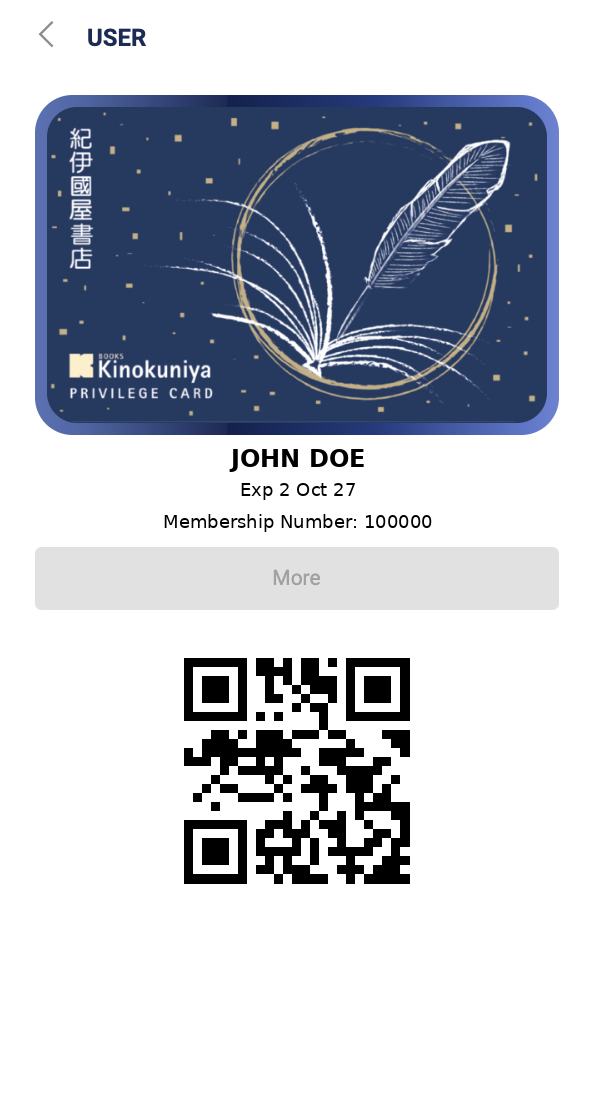
According to the Kinokuniya case study, the program brought in 10,000+ new members and 5,000+ renewals in six months, with 15,000+ customers tracked since launch. It started as a Singapore pilot and rolled out to Thailand on the same setup.
The lesson for Malaysian retailers: a paid membership doesn't need a complicated benefit list. It needs one clear benefit, a fast sign-up and a card that's always on the member's phone.
SHOPLOOOH: one program across store and Shopify
You don't need a national chain to make this work. SHOPLOOOH, a Malaysian lifestyle retailer founded by Garrick and Audrey, runs one multi-tier program across its online store and physical outlet, with one status and one set of points wherever a customer shops. In the six months after launch, they brought in 4,000+ new members and logged 1,300+ reward transactions, with real-time visibility into spending patterns they could act on.
A Retail Loyalty Launch Plan You Can Run This Quarter
Here's a realistic sequence for a Malaysian retailer starting from a plastic card, a paper form or nothing at all. The platform setup is the quick part. The decisions are what take time.
Decide the structure and connect your channels
Pick your model. Free, paid or hybrid, using the three decisions above. Write each tier's benefit in one sentence. If you can't, it's too complicated.
Connect POS and e-commerce. Every outlet and your webstore should write to the same member profile. Use receipt upload as a bridge for any outlet that isn't integrated yet.
Set up consent and data handling. Clear opt-ins at sign-up, a privacy notice members can find, and someone accountable for the data.
Launch to staff first, then to shoppers
Train the front line. If a cashier can't explain the program in one sentence, members won't understand it either. Give staff a script and a way to see a member's tier at the till.
Migrate existing members. If you have card-holders today, move everyone at once and convert existing points or status so nobody feels they lost something.
Make joining instant. A QR code at the counter, a link on receipts and a sign-up prompt at online checkout. Pair it with a welcome reward they can use on the next visit.
Automate the moments that bring people back
Turn on lifecycle triggers. Welcome series, birthday-month gift, a nudge after 60 days of inactivity, and a thank-you after a member's first big purchase.
Segment, then stop blasting. Group members by spend, category and channel, and send each group something relevant. This is where ALL IT's 158% engagement lift came from.
Read the first results. Compare member and non-member repeat purchase rates, and decide what to change for the next quarter.
Want to size the opportunity before you start? The free Loyalty ROI Calculator gives you a quick estimate from your own numbers.
Build It PDPA-Ready From Day One
A loyalty program collects names, phone numbers, emails, birthdays and purchase history. In Malaysia, that puts it squarely under the Personal Data Protection Act 2010. The 2024 amendments came into force in phases during 2025, with the biggest changes from 1 June 2025. Before you launch, check that you can answer yes to each of these.
- Members give clear, separate consent for marketing messages when they join.
- You know whether your business meets the threshold to appoint a data protection officer, and who that person is.
- You have a process to assess and report a data breach to the Commissioner if one happens.
- You can export a member's data if they ask for it under the new data portability right.
- You know where member data is stored, including any transfers outside Malaysia.
This is a practical starting point, not legal advice. For your specific setup, check with your legal or compliance team.
The Retail Loyalty Metrics That Actually Matter
If the headline number on your loyalty report is total sign-ups, you're measuring the easy part. Here's a more honest scorecard.
| Stop tracking this | Track this instead |
|---|---|
| Total members registered | Active members in the last 90 days |
| Points issued | Reward redemption rate |
| Email open rate | Repeat purchase rate, members vs non-members |
| Online and offline reported separately | Share of revenue from identified members, all channels |
| Paid sign-ups | Paid membership renewal rate |
Retail Loyalty Program Malaysia: Common Questions
What is a retail loyalty program?
A retail loyalty program rewards shoppers for coming back. Members earn points, perks or tier status on purchases made in store and online, and the retailer gets one profile per customer to personalise offers and measure repeat spend.
How long does it take to launch a retail loyalty program in Malaysia?
On an off-the-shelf platform like Eber, setup takes anywhere from a day to a few weeks, depending on integrations. Plan around 90 days to design the structure, launch to members and read your first results.
Should Malaysian retailers charge for membership?
A paid membership works when the value is obvious and repeat purchase is likely. At ALL IT Hypermarket in the Klang Valley, 67% of members chose to pay for membership. Many retailers run a free tier for reach alongside a paid tier for their best customers.
Do customers need to download an app to join a retail loyalty program?
Not necessarily. Members can join through a web page, check points on a branded member site and carry a digital card in Apple Wallet or Google Wallet. An app makes sense when it offers something worth opening between purchases, such as games or exclusive drops.
How does the PDPA affect a retail loyalty program in Malaysia?
Loyalty programs process personal data, so Malaysia's Personal Data Protection Act 2010 applies. Since the 2024 amendments took effect in 2025, organisations must notify qualifying data breaches, support data portability requests and, where they meet the set thresholds, appoint a data protection officer. Collect clear consent at sign-up.
Can one loyalty program cover physical stores and an online store?
Yes. Connect your POS and your e-commerce platform, such as Shopify, to the same loyalty account so points, tiers and rewards follow the customer across channels. Receipt upload can bridge the gap while a POS integration is still being set up.
How do I measure whether a retail loyalty program is working?
Track active members in the last 90 days, repeat purchase rate of members versus non-members, reward redemption rate and, for paid tiers, renewal rate. Total sign-ups on their own tell you very little.
Comparing platforms? Read our guide to the best loyalty program software in Malaysia, or see how Eber works for retail.
Sources: ALL IT, Kinokuniya and SHOPLOOOH figures are from each brand's program data on Eber, as published in their case studies (ALL IT, Kinokuniya, SHOPLOOOH). Market size: Research and Markets, Malaysia Loyalty Market Databook Q2 2026. PDPA timeline: Baker McKenzie.